How to Use Residential Proxies to Access Hidden Prices and Optimize Web Scraping
· based on the channel Lukas Margerie
Residential proxies are essential tools for accessing hidden prices and performing effective web scraping, especially when websites display region-specific content. Unlike VPNs that route your traffic through data center IPs—often flagged or blocked—residential proxies use real home internet connections, making your requests appear as if they originate from local users. This enables seamless access to localized pricing and content that would otherwise be inaccessible.
One leading provider of residential proxies is DataImpulse, which powers agents like the Claude Code agent developed by Lukas Margerie. This agent opens pricing pages from several countries including the US, Germany, Brazil, and India, and consolidates the data into a comprehensive pricing teardown. By leveraging residential proxies, it bypasses geo-restrictions and avoids manual checking.
Understanding Residential Proxies Versus VPNs
VPNs route all your internet traffic through a single server, usually a data center IP address. These IPs are often well-known and can be flagged or blocked by websites, especially those enforcing strict geo-targeting or anti-scraping measures. Residential proxies, in contrast, route each request through a different real home ISP connection. This makes each request appear as if it comes from a genuine local user, reducing the chance of detection or blocking.
This distinction is crucial when scraping pricing pages or accessing region-locked services. For example, Spotify Premium costs $12.99 in the US but only about $1.45 in India. Using residential proxies allows you to see these differences firsthand without traveling or manually verifying prices.
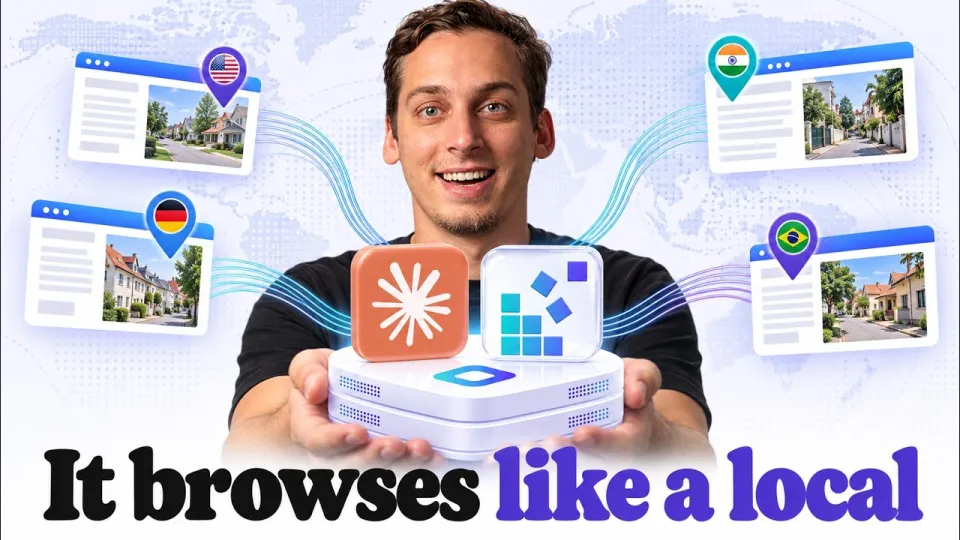
How Rotating Residential Proxies Work
Rotating proxies assign a fresh exit IP address for every new connection or request. This means:
- Each request appears to come from a different residential IP.
- It prevents IP bans or throttling by target websites.
- It mimics natural browsing behavior, making scraping less detectable.
This rotation is vital for large-scale data collection tasks such as price comparison or market research across multiple regions. With country targeting, you can specify which country’s IPs the proxy should use by appending certain suffixes to your username, enabling precise geo-targeting without multiple accounts.
Using Claude Code Agent with Residential Proxies for Price Discovery
The Claude Code agent is an AI-powered tool that automates web scraping by combining residential proxies and Playwright, a browser automation library. It:
- Opens pricing pages from various countries using residential proxies.
- Extracts and consolidates price data into a single, easy-to-analyze report.
- Supports SaaS platforms and template sellers in understanding regional pricing strategies.
For example, the agent revealed significant pricing disparities for services like Spotify, Canva Pro, ChatGPT, and Netflix across the US, Germany, Brazil, and India. This insight helps businesses optimize pricing and marketing strategies based on regional demand and purchasing power.
Benefits of Residential Proxies for Web Scraping and Geo-Targeting
Residential proxies provide several advantages:
- Higher success rates: Because residential IPs are less likely to be blocked or flagged.
- Access to localized content: Essential for regional price comparison, SEO monitoring, and market analysis.
- Improved anonymity: Requests appear as if from real users, reducing detection risks.
- Scalability: Rotating proxies allow scraping massive amounts of data without IP bans.
These benefits are especially important for SaaS platforms, e-commerce, and digital marketers who rely on accurate geo-specific data.
Common Questions About Residential Proxies
Many users ask about the differences between VPNs and residential proxies, how to select the best provider, and the legality of using proxies for web scraping. Understanding these aspects ensures effective and ethical use.
Useful Links
- DataImpulse residential proxies for web scraping and geo-targeting: https://dataimpulse.com/?utm_source=youtube&utm_medium=video&utm_campaign=lukasmargerie
- Claude Code AI agent: https://www.claude.com/product/claude-code
- Playwright browser automation: https://playwright.dev
- Community Discord: https://discord.com/invite/vZxn6wZrDD
- Skool Builderz Gym: https://www.skool.com/builderzgym
Conclusion
Residential proxies are powerful tools for uncovering hidden prices and conducting accurate, large-scale web scraping. Their use of real home ISP connections and rotating IPs enables access to geo-targeted content that VPNs and data center proxies often cannot reach. The Claude Code agent exemplifies how combining residential proxies with AI and automation frameworks like Playwright can streamline price comparisons and market research across multiple countries.
For those interested in trying residential proxies, DataImpulse offers a reliable network optimized for these tasks. This article is based on the detailed breakdown by Lukas Margerie, whose expertise helps demystify the practical applications of residential proxies in 2026.
Key takeaways
- Residential proxies route requests through real home ISP connections, avoiding data center IP flags.
- Rotating residential proxies provide fresh IP addresses for each connection, enhancing anonymity.
- Claude Code agent uses residential proxies to gather pricing from multiple countries simultaneously.
- Regional pricing differences can be uncovered by targeting countries via residential proxies.
- DataImpulse offers a residential proxy network optimized for web scraping and geo-targeted access.
Questions & answers
What is the main difference between a VPN and a residential proxy?
A VPN routes all your traffic through a single data center IP which can be flagged or blocked, while a residential proxy sends each request through a real home ISP connection, making it appear as local traffic and harder to detect.
Why are rotating residential proxies important for web scraping?
Rotating residential proxies provide a fresh IP for every connection, preventing IP bans and mimicking natural user behavior, which makes scraping more efficient and less likely to be blocked.
Can residential proxies help reveal regional pricing differences?
Yes, because residential proxies make requests appear as if coming from specific countries, they allow users to access localized pricing and content that varies by region.
Is using residential proxies for web scraping legal?
Using residential proxies is generally legal, but users must comply with the target website's terms of service and avoid violating any laws related to data access and privacy.
Source: This Claude Code Agent Uses Residential Proxies to Find Hidden Prices · Markdown version