5 Key Insights Into the AI Memory Shortage and Its Impact on Computing
· based on the channel Computer Age
AI Memory Shortage is emerging as a critical bottleneck in the advancement of artificial intelligence systems, where the ability to efficiently move and process massive data sets hinges not only on powerful processors but also on the availability of advanced memory technologies. As AI models scale, the shortage of High Bandwidth Memory (HBM) — particularly the newest HBM4 generation — and DRAM components threatens to constrain AI infrastructure deployment, affecting everything from data centers to semiconductor packaging.
Understanding the AI Memory Shortage
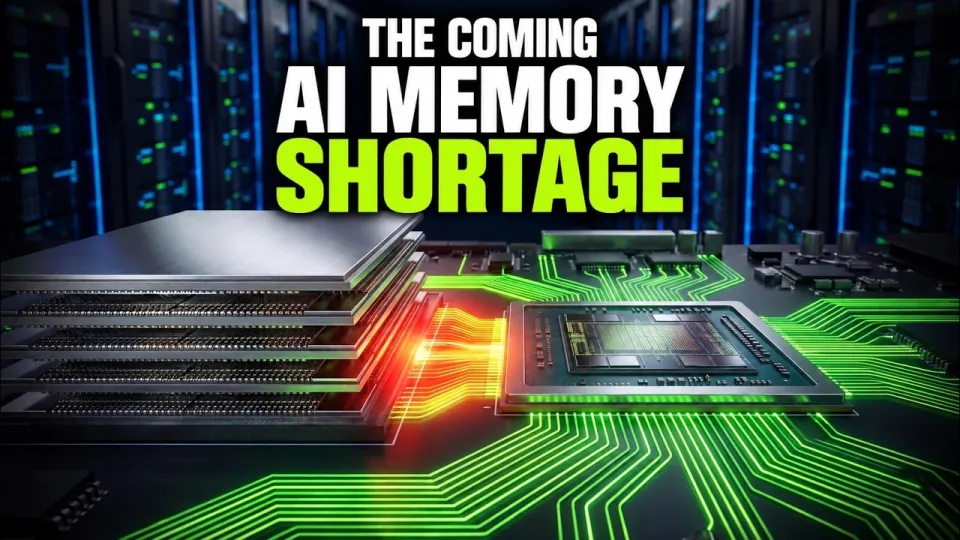
The AI memory shortage refers to the growing gap between AI computing demands and the supply of specialized memory components needed to feed data swiftly to processors. High Bandwidth Memory, or HBM, is a critical element because it stacks memory dies vertically and connects them with thousands of microscopic wires, delivering the data throughput AI chips require. However, manufacturing HBM is complex, costly, and capacity-constrained, causing supply shortages even as demand skyrockets.
Why High Bandwidth Memory Is a Bottleneck
HBM drastically improves data transfer rates compared to traditional DRAM by integrating memory close to the processor using advanced packaging technologies like TSMC’s CoWoS. Yet, producing HBM involves precise wafer stacking, through-silicon vias (TSVs), and interposer technologies that push fabrication facilities to their limits. HBM4, the latest generation, promises even higher bandwidth but is more challenging to produce, leading to factory capacity shortages and allocation policies.
The Role of Factory Capacity and Allocation
Memory suppliers such as Micron, SK hynix, and Samsung operate with limited capacity for manufacturing HBM and DRAM. Due to this, production is often "allocated" — meaning manufacturers assign output to customers based on contracts and priority rather than open market availability. Allocation does not mean empty store shelves but rather restricted access and longer lead times for new buyers. Building new semiconductor fabs or upgrading existing ones takes years, so supply adjustments lag behind demand surges.
Market Signals of the AI Memory Shortage
The shortage manifests through four main indicators:
- Higher Prices: Memory components, especially HBM, see escalating costs reflecting scarcity.
- Longer Lead Times: Customers experience delays in receiving orders.
- Restricted Access: New entrants or smaller firms struggle to secure supply.
- Shift in Supplier Priorities: Suppliers may prioritize large AI and cloud providers.
These signals help monitor the evolving landscape of memory availability in AI infrastructure.
Potential Easing Factors and the Future Outlook
While the AI memory shortage poses immediate challenges, several factors could alleviate pressure over time. Continued investment in semiconductor fabrication, innovations in packaging, and alternative memory technologies might expand supply. Additionally, some rebound effects could emerge as market forces balance demand and supply, and as AI architectures optimize memory usage. Nevertheless, memory shortages are likely to remain a strategic concern in AI hardware development.
Summary
The AI memory shortage is a multifaceted issue shaped by the complex manufacturing of High Bandwidth Memory, constrained factory capacities, and rapidly growing AI data demands. It impacts AI chip performance, infrastructure deployment, and market dynamics, with signs visible in pricing and supply chain behavior. Understanding these factors is essential for anticipating the technology landscape ahead. This analysis is based on insights from the Computer Age channel, which specializes in clarifying technological trends shaping our world.
Key takeaways
- AI memory shortage driven by high demand for High Bandwidth Memory (HBM).
- HBM4 production faces manufacturing complexity and limited factory capacity.
- AI chip performance increasingly bottlenecked by memory bandwidth and availability.
- Memory allocation means prioritized supply, not empty shelves.
- Market indicators include rising prices, longer lead times, and restricted access.
Questions & answers
What is causing the AI memory shortage?
The AI memory shortage is primarily caused by the limited supply of High Bandwidth Memory (HBM), which is difficult to manufacture and in high demand due to AI systems requiring fast, large-scale data movement.
Why is High Bandwidth Memory (HBM) important for AI chips?
HBM provides extremely fast data transfer rates by stacking memory dies close to processors, which is crucial for AI chips to handle large data sets efficiently and avoid bottlenecks in computation.
What does it mean when memory production is 'allocated'?
Allocation means that memory suppliers prioritize and assign their limited production capacity to certain customers based on contracts or strategic importance, rather than supplying on open market demand, leading to restricted access for others.
How can the AI memory shortage impact the technology market?
The shortage can lead to higher prices, longer delivery times, and limited availability for some customers, potentially slowing down AI infrastructure deployments and favoring large companies with prioritized supply agreements.